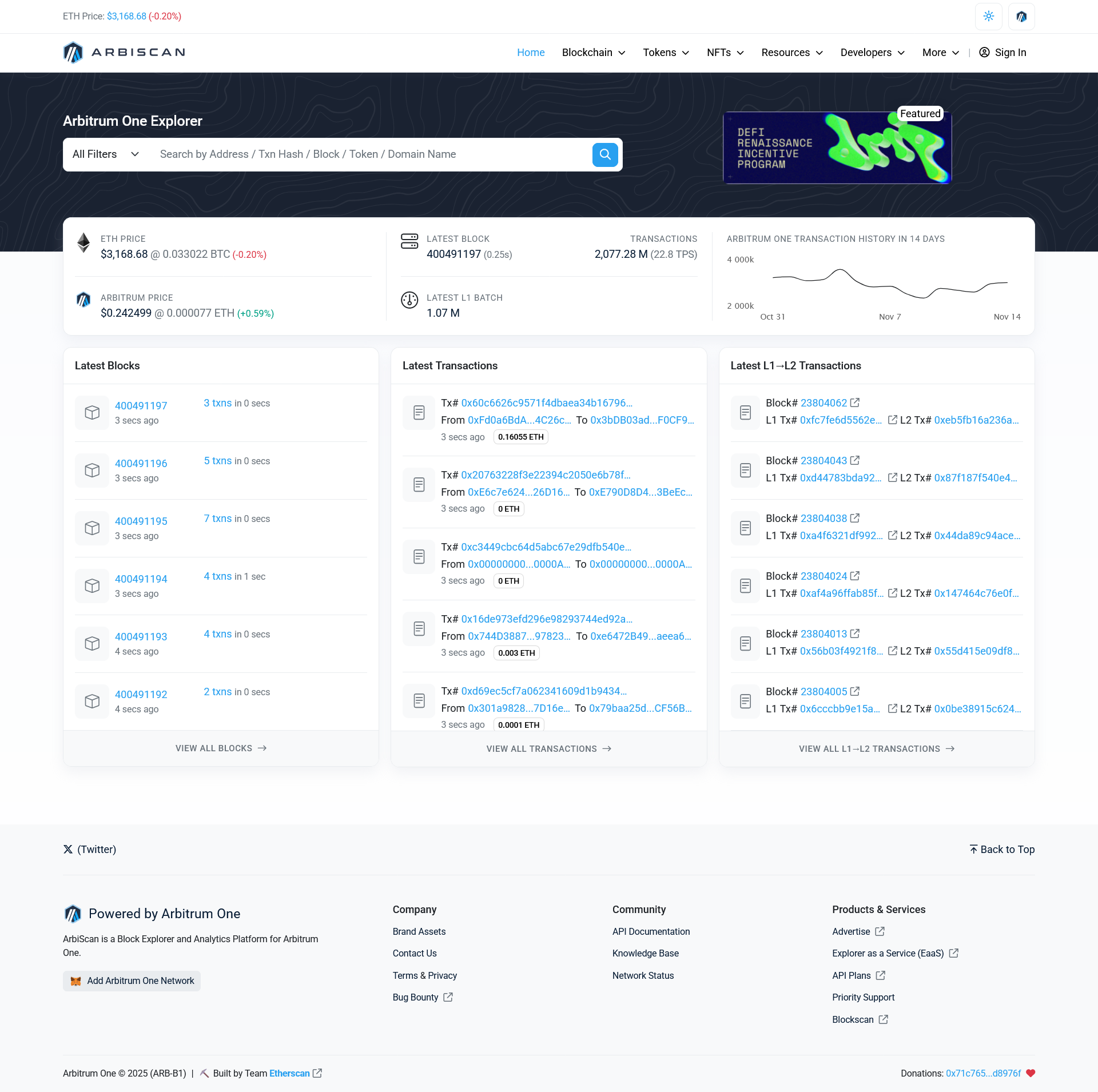
Arbiscan: A Complete Guide to the Arbitrum Blockchain Explorer :-
As Layer 2 solutions gain traction for solving Ethereum’s scalability challenges, Arbitrum has emerged as one of the most widely adopted networks. Powering transparency and usability within the Arbitrum ecosystem is Arbiscan, the official blockchain explorer designed specifically for Arbitrum networks.
What Is Arbiscan?
Arbiscan is a blockchain explorer and analytics platform for the Arbitrum network, developed by the same team behind Etherscan. It allows users to view, verify, and interact with on-chain data such as transactions, wallet addresses, smart contracts, tokens, and blocks on Arbitrum.
In simple terms, Arbiscan is the window through which users can see everything happening on Arbitrum in real time.
Why Arbiscan Matters :-
Blockchains are transparent by design, but raw blockchain data is complex and difficult to interpret. Arbiscan converts this data into a readable, searchable interface, making it accessible to:
. Developers building decentralized applications (dApps)
. Traders tracking transactions and token activity
. Investors auditing smart contracts
. Researchers analyzing network performance
Without tools like Arbiscan, interacting confidently with Arbitrum would be far more difficult.
Key Features of Arbiscan ;
1. Transaction Tracking :-
Users can search for transaction hashes (TXIDs) to view:
. Transaction status (pending, successful, failed)
. Gas fees paid
. Block confirmations
. Sender and receiver addresses
This is especially useful when troubleshooting delayed or failed transactions.
2. Address and Wallet Analysis :-
By entering a wallet address, users can see:
. Token balances (ERC-20, NFTs)
. Transaction history
. Interactions with smart contracts
This helps users audit their own wallets or analyze on-chain activity.
3. Smart Contract Verification :-
Arbiscan allows developers to:
. Verify and publish smart contract source code
. Read and write contract functions
. Audit deployed contracts for transparency and security
Verified contracts build trust and are essential for DeFi projects.
4. Token and NFT Explorer :-
Arbiscan provides detailed pages for:
. ERC-20 tokens (supply, holders, transfers)
. NFTs and NFT collections
. Token approval tracking
This is critical for monitoring new tokens and detecting suspicious activity.
5. Gas Tracker and Network Stats :-
Users can monitor:
. Current gas fees on Arbitrum
. Network utilization
. Block times and transaction throughput
This data helps users choose optimal times for transactions.
Arbiscan and the Arbitrum Ecosystem:-
Arbiscan supports multiple Arbitrum networks, including:
. Arbitrum One (main network)
. Arbitrum Nova (optimized for gaming and social apps)
It plays a central role in the ecosystem by enabling transparency across DeFi platforms, NFT marketplaces, DAOs, and bridges operating on Arbitrum.
Who Uses Arbiscan?
. Developers – for contract deployment, debugging, and verification
. Traders & DeFi users – to track swaps, liquidity, and approvals
. Security analysts – to investigate exploits and abnormal behavior
. Everyday users – to confirm transactions and wallet balances
Arbiscan vs Etherscan
While Arbiscan shares the same interface and usability as Etherscan, it is tailored specifically for Arbitrum’s Layer 2 architecture. Transaction costs, execution details, and cross-chain interactions differ from Ethereum mainnet, and Arbiscan reflects these differences accurately.
Conclusion
Arbiscan is an essential tool for anyone interacting with the Arbitrum blockchain. By making on-chain data transparent, searchable, and understandable, it strengthens trust and usability across the entire Arbitrum ecosystem.
Whether you are a developer deploying smart contracts, a trader tracking transactions, or a newcomer learning how Arbitrum works, Arbiscan serves as the definitive source of truth for the network.